
According to the American Dental Association Health Policy Institute’s analysis of a 2017 Nationwide Emergency Department Sample (NEDS), every 15 seconds someone visits the emergency room because of a dental condition (American Dental Association Health Policy Institute, 2020). While we advocate for and educate our patients on prevention, we understand the large need for emergency or acute dental care. In this article, we want to highlight what an emergency dental care visit will look like and more.

When Do You Need an Emergency Dental Appointment?
Dental emergencies can happen suddenly, and well before your next scheduled appointment. It is important to seek treatment if you are experiencing a dental emergency to mitigate the issue, as well as manage symptoms. Common dental emergencies include, but are not limited to:
-
- A knocked-out tooth, or teeth
-
- Cracked or broken tooth, or teeth
-
- Extruded or loose tooth, or teeth
-
- Lost, broken, or damaged dental restorations
-
- Severe toothache
If you are experiencing any of these symptoms, please reach out to an emergency dentist near you. However, if you are experiencing a life-threatening emergency, please dial 911 for immediate assistance or the appropriate number for your country.
What to Expect
According to Harper, McKenzie Dental Center’s front desk staff, when a patient calls regarding a dental emergency, an intake is done to assess the patient for care and treatment. From there, Harper states that the front desk staff work diligently to schedule the patient.
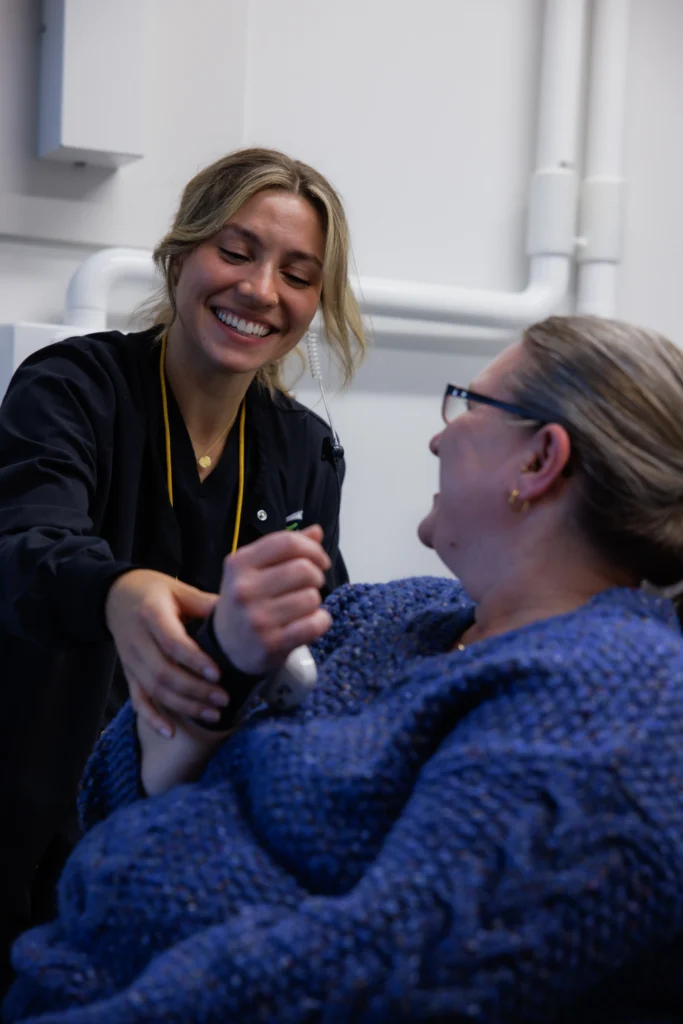
Once the patient is in the office and checks in, a dental assistant will help the patient back, take vitals, perform an assessment, and take X-rays. Having all of these prepped will help the dentist quickly be able to make accurate assessments and present informed treatment plans.
Once the dentist is able to make an assessment, the dentist presents treatment plans to the patient. According to Dr. Lee, McKenzie Dental Center’s lead dentist, it’s important for the patient to know what their options are, costs, coverage, and to collaborate on care. From there, if a patient needs a referral, the team can make arrangements. If a patient is satisfied and agrees to treatment, many treatment options at clinics like McKenzie Dental Center can take place the same day.
Common Pain Management Options
Often with emergency dental visits, pain management is a high priority, which is why doctors will take assessments to understand the patient’s needs. Treatments can range from nonsteroidal anti-inflammatory drugs (NSAIDs), antibiotics for infections, local anesthetics, and more.
During treatment, local anesthetics are often used. However, other alternative options may be available. Options such as nitrous oxide or anesthesia may be available. As always, it’s best to consult and collaborate with your dentist on the appropriate care.
Why it Matters
Dental emergencies can be an urgent issue that affects your oral, or overall health. Oftentimes they require attention from dental professionals, in order to prevent damage or serious future concerns. At McKenzie Dental Center, patient care is our top priority. As a result, we invest heavily in in-house milling and sintering, which can offer more than just same-day temporary crowns. Many times, patients can receive treatment like a root canal and “permanent” crown or bridges the same day. When this is not possible would be if there is high aesthetic work or a very large bridge, would be some examples and edge cases, according to Dr. Lee.
References
American Dental Association Health Policy Institute. (2020, April). Emergency department visits for dental conditions – A snapshot. https://www.ada.org/-/media/project/ada-organization/ada/ada-org/files/resources/community-initiatives/action-for-dental-health/emergency-department-referrals/ed_referral_hpi_infographic.pdf